Vent question help
Crawl Space Vents Open or Closed in Hickory, NC?
Whether to open or close vents is a common question for homeowners dealing with crawl-space moisture.
Disclosure: Hickory Crawl Space Help is an independent lead-generation website. We do not perform contractor services directly. Requests may be connected with a local crawl-space or foundation service provider.
Homeowner request path
Hickory, NC- Share the crawl-space issue you are seeing.
- Choose vapor barrier, moisture, encapsulation, waterproofing, or floor-support help.
- Your request may be connected with a local provider when available.
Why the question comes up
Crawl space vents exist to allow air circulation under the home. In some climates that helps reduce moisture buildup. In the Hickory area, however, the combination of humidity, rain, and temperature swings means open vents can sometimes let more moisture in than they let out.
What open vents may do in the Hickory area
In summer, warm humid air can enter through open vents and condense on cool surfaces in the crawl space. In winter, cold dry air may reduce humidity but can also make moisture problems harder to notice until warmer months. Open vents can also let in rain water during storms, which is a particular concern in properties with poor drainage around the foundation.
What closing vents may involve
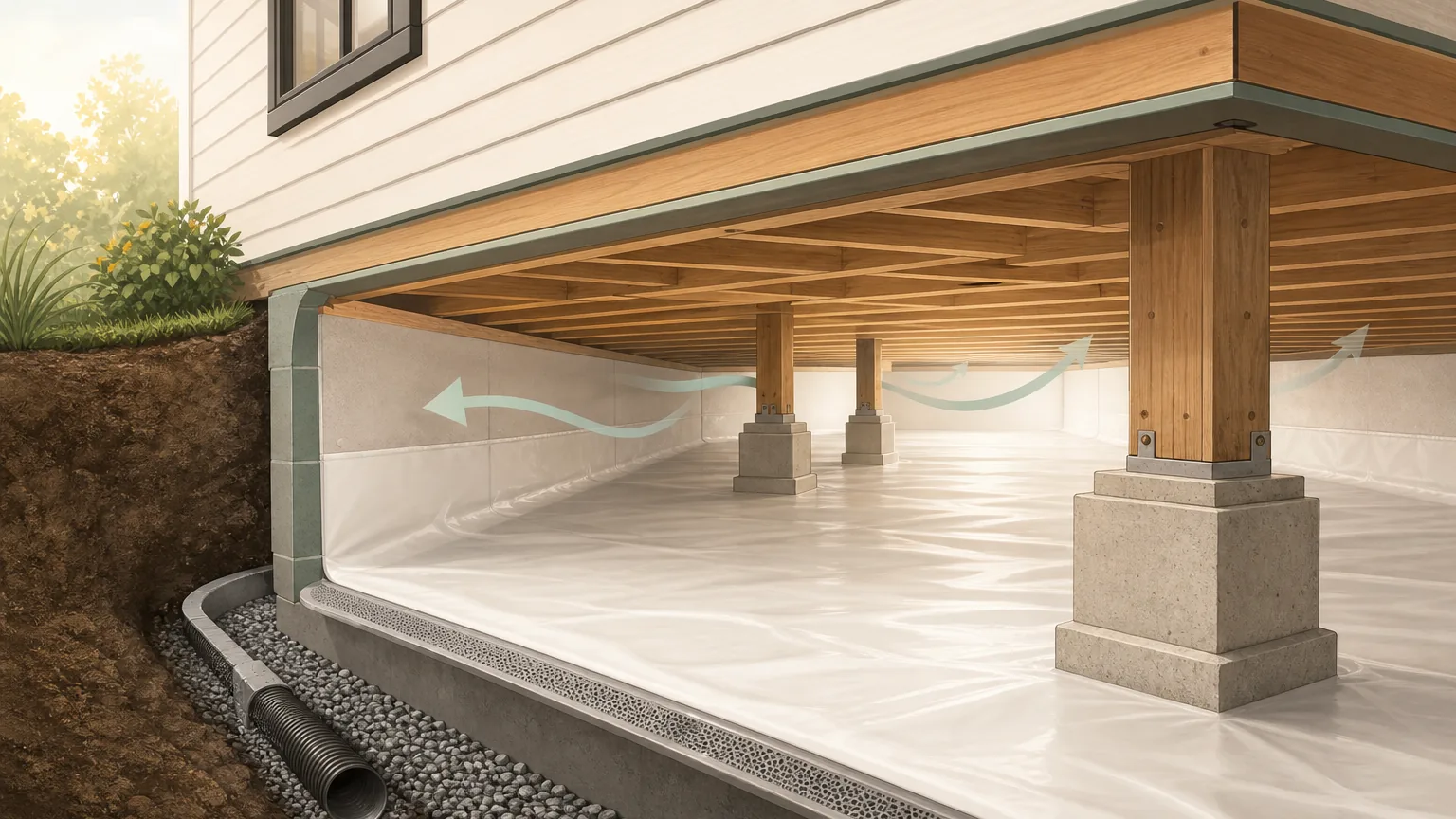
Closing vents belongs to a closed-crawl conversion, not a weekend cover job. The scope has to account for the enclosure, ground and wall moisture, air movement, equipment, and the method that will control humidity after outdoor-air openings are closed.
North Carolina treats closure as permitted work
The North Carolina Office of State Fire Marshal dated its interpretation December 11, 2025. Under that document's reading of Section R409 in the 2018 North Carolina Residential Code, the shift from wall-vented construction to a closed crawl space carries a permit requirement. Its moisture-control choices include designing the crawl space as conditioned space, using exhaust, adding supply air, moving air from the house with a fan, or installing a permanent dehumidifier. Ask Catawba County to confirm the current permit, inspection, and trade requirements for the proposed work.
Some openings may be flood vents
A foundation opening can serve a floodplain requirement rather than ordinary ventilation. Do not block or alter a possible flood opening until the local floodplain and permit authorities confirm the property's requirements.
Check combustion safety before changing the enclosure
Fuel-burning equipment in the crawl space needs combustion-safety evaluation before vents or other air paths change. The equipment and proposed enclosure should receive the appropriate qualified and permit review.
Keep termite inspection areas visible
Liner and wall-sealing details should preserve the visibility needed for termite inspection. Confirm the inspection gap and access expectations before material covers foundation-wall areas.
When vent management may matter more
Vents tend to matter more in certain situations: when the vapor barrier is missing or damaged, when there is no mechanical ventilation or air exchange plan, when drainage lets water get close to the vent openings, or when the crawl space is used for storage. In these cases, the vent strategy may be part of a broader moisture-control plan.
Use moisture control as the service parent
Review crawl space moisture-control help in Hickory before treating vent covers as a complete fix. Compare the vent condition with recorded humidity symptoms, then send the vent, liner, and water details.
Disclosure: Hickory Crawl Space Help is an independent lead-generation website. We do not perform contractor services directly. Requests may be connected with a local crawl-space or foundation service provider.
Ask about your vents
Common questions about crawl space vents
Should I keep my crawl space vents open or closed in North Carolina?
A seasonal open-or-closed rule is too simple for a Hickory home. Keeping conventional ventilation or converting to a closed crawl space are different building approaches, and the closed-crawl conversion is permitted work that needs an approved moisture-control plan.
Do I need a permit to convert my vented crawl space to a closed crawl space?
Yes. The North Carolina Office of State Fire Marshal interpretation carries a December 11, 2025 date and applies Section R409 of the 2018 North Carolina Residential Code: moving from conventional wall ventilation to closed-crawl construction requires a permit. Confirm current permit, inspection, and trade requirements with Catawba County.
Will closing vents cause mold or rot problems?
Blocking outdoor air without correcting water, ground vapor, or humidity can leave a damp enclosure. A permitted closed-crawl plan must pair the enclosure change with a recognized moisture-control method and the conditions found under the home.
How do I know if my vents are contributing to moisture problems?
Useful clues include condensation near openings, damp insulation at the perimeter, stormwater entering low vents, and humidity or odor that worsens during warm weather. The moisture-control hub explains how to compare those clues with readings and other water sources.
Can I just cover my crawl space vents with foam board?
Treating vent closure as a weekend cover job can bypass permit, moisture-control, flood-opening, combustion, and inspection questions. Confirm what each opening does and what closed-crawl design applies before blocking it.
Do all crawl spaces need vents?
No single vent rule fits every crawl space. The home may remain conventionally vented or use a permitted closed-crawl design, and any foundation opening that serves a floodplain function needs separate review before alteration.
What happens if I seal my vents but do not encapsulate?
Vent covers alone do not manage ground vapor, leaks, standing water, or the humidity left inside. North Carolina recognizes several moisture-control paths for a closed crawl space, so the permitted design should identify the enclosure and control method together.