Basic vapor barrier: $1,000 to $4,000
- Primarily covers exposed soil
- Often starts with 6-mil polyethylene
- Vents and walls may remain open
- Fits a dry-ish space with minor ground vapor
- Does not include mechanical humidity control by default
Choose the right sealing scope
Compare ground coverage, wall and vent closure, liner grade, humidity control, permit implications, and planning cost before choosing a path.
Disclosure: Hickory Crawl Space Help is an independent service that helps connect homeowners with local crawl space professionals. We do not perform contractor services ourselves. Your request may be shared with a local provider who can assist with your project.
Homeowner request path
Hickory, NCQuick answer: A basic 6-mil vapor barrier covers soil for about $1,000 to $4,000. Full encapsulation uses sealed 12- to 20-mil floor and wall liner, closes vents, and adds humidity control for about $5,000 to $15,000. Match the scope to the actual moisture pattern, then request the option you want priced.
A vapor barrier can be enough when the soil is the main moisture source, the crawl space does not collect water after rain, humidity remains controlled, framing stays dry, and odor does not persist. It gives the homeowner a smaller scope while preserving ventilation and other existing assembly choices.
Recurring humid-air entry, condensation, widespread musty odor, repeated liner displacement, or a need to seal walls and vents moves the decision toward encapsulation. Drainage comes first when the liner floats or water crosses the floor. The closed space then needs a defined conditioning method rather than an assumption that liner alone will control the air.
North Carolina Office of State Fire Marshal guidance dated December 11, 2025 says conversion from a conventional vented crawl space to a closed crawl space under Section R409 requires a permit. That question belongs to the encapsulation path described here. A bare ground-cover barrier does not create the same closed assembly. Confirm current permit and inspection requirements with Catawba County for the proposed work.
The vapor-barrier page covers floor preparation, seams, penetrations, and repair-versus-replacement choices. The encapsulation page owns wall attachment, vent and access closure, conditioning, condensate, and the permit source.
Mark each proposal as ground cover or closed crawl space, then compare liner thickness, floor and wall coverage, seam treatment, vent and door work, conditioning, drainage exclusions, electrical work, removal, maintenance, and permit responsibility. Use the Hickory cost guide when either option includes work beyond its base range.
Disclosure: Hickory Crawl Space Help is an independent service that helps connect homeowners with local crawl space professionals. We do not perform contractor services ourselves. Your request may be shared with a local provider who can assist with your project.
Compare your options
Send the floor area, liner condition, water history, humidity pattern, vent status, and whether you want ground cover or a closed-crawl proposal.
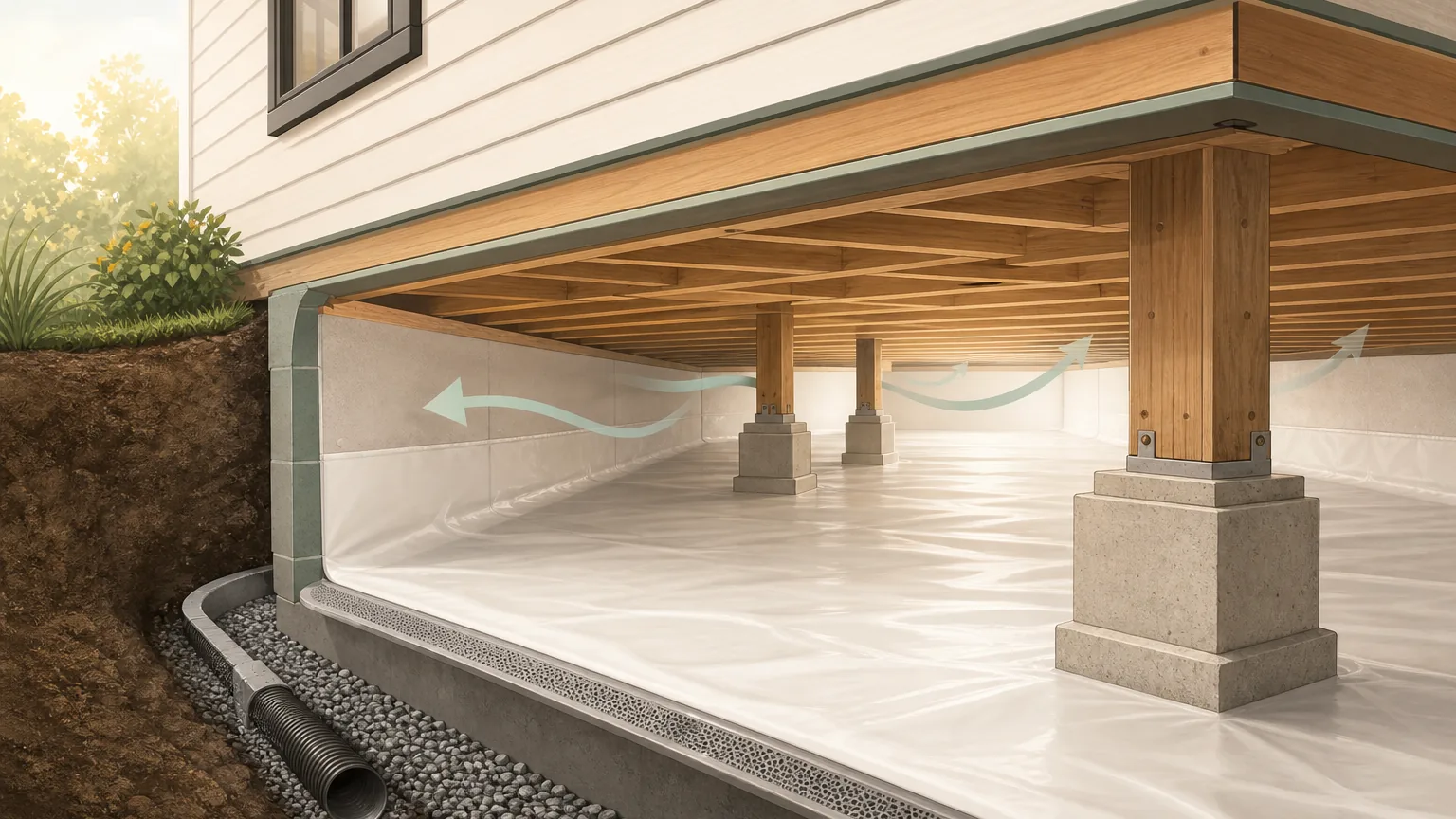
A basic vapor barrier covers the ground and may leave vents and walls open. Full encapsulation seals reinforced floor and wall liner, closes vents and access leaks, and adds managed humidity control after drainage needs are handled.
A dry-ish crawl space with minor ground vapor, no recurring standing water, stable humidity, and no persistent musty odor may need only continuous ground cover. The installation still needs fitted seams, full soil coverage, and durable material for the expected traffic.
Encapsulation becomes the stronger path when humid air, condensation, persistent odor, repeated liner failure, or widespread moisture requires a sealed and conditioned crawl space. Active water still needs drainage or waterproofing before closure.
Use $1,000 to $4,000 for basic ground-cover vapor-barrier work and $5,000 to $15,000 for full encapsulation as national planning ranges. Drainage, a dehumidifier, insulation removal, and structural repairs can sit outside the base quote.
The permit question applies when work converts a conventional vented crawl space into a closed crawl space, which is the encapsulation path described here. A bare ground-cover vapor barrier does not create that closed-crawl assembly. Confirm current requirements for the proposed work with Catawba County.