Humidity help
Crawl Space Humidity in Hickory, NC
Why humidity builds up under Hickory homes and what may help bring it under control.
Disclosure: Hickory Crawl Space Help is an independent lead-generation website. We do not perform contractor services directly. Requests may be connected with a local crawl-space or foundation service provider.
Homeowner request path
Hickory, NC- Share the crawl-space issue you are seeing.
- Choose vapor barrier, moisture, encapsulation, waterproofing, or floor-support help.
- Your request may be connected with a local provider when available.
Why crawl spaces stay humid in Hickory
The Hickory area sees significant rainfall throughout the year, high summer humidity, and temperature swings that can cause condensation inside crawl spaces. The soil under the home stays damp for long stretches, and open vents can bring in humid outdoor air that condenses on cool surfaces. This combination makes crawl space humidity a common issue rather than an unusual one.
What high humidity does under the home
Moist air in the crawl space can wet insulation, cause wood to swell or soften, create conditions for mold growth, and make musty odors drift up into the living space. Over time, sustained high humidity can contribute to floor framing concerns and reduced indoor air quality.
What typically drives the humidity
Ground moisture is usually the largest contributor — the soil under the home stays damp and sends vapor upward through any gaps in the existing barrier. Open vents let humid outdoor air in, especially in summer. Lack of mechanical ventilation means the air under the home stagnates rather than circulating. Rainfall near the foundation, poor gutter management, and low grading can all add water to the soil around and under the home.
What may reduce crawl space humidity
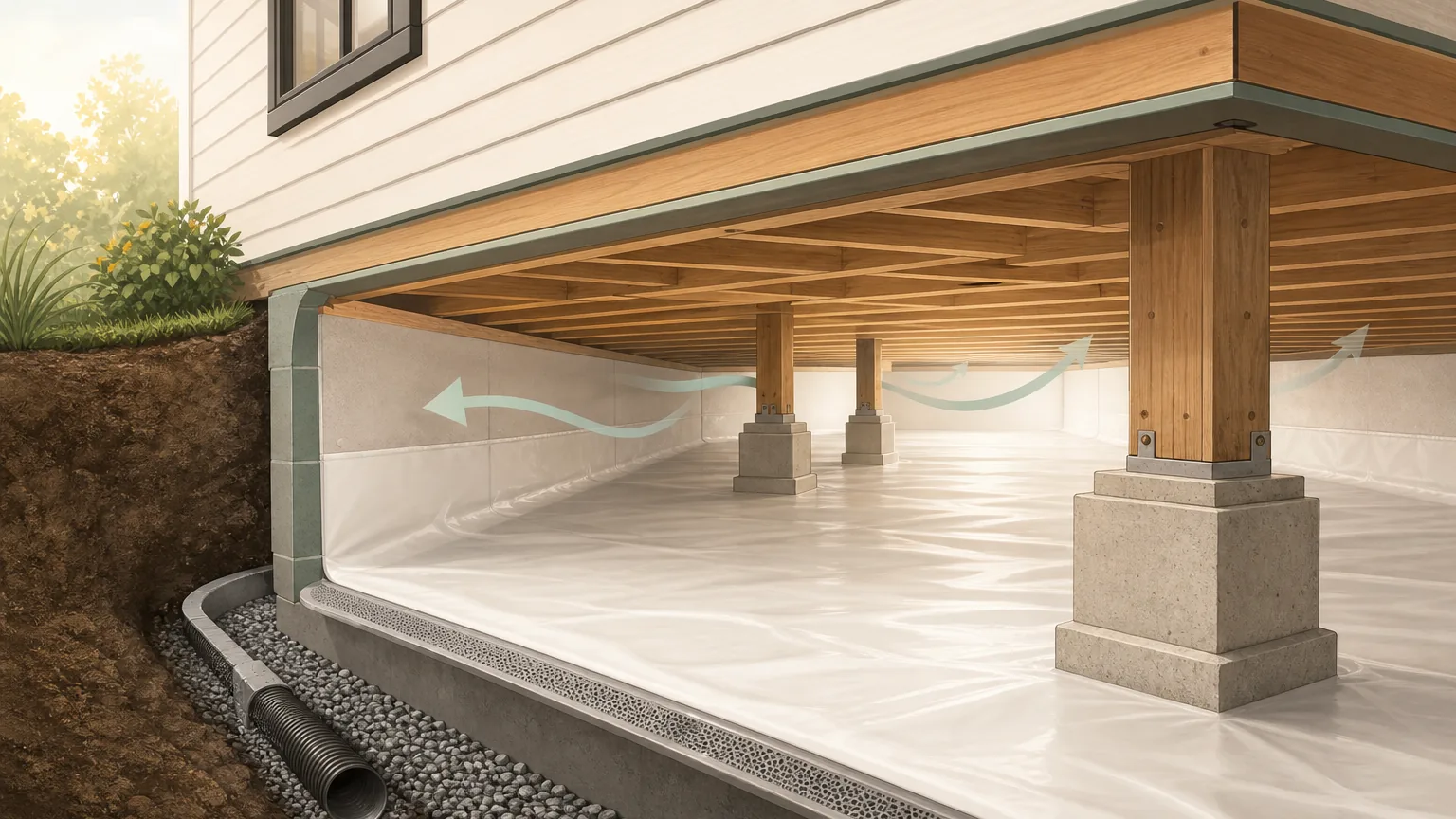
Steps that may help include a vapor barrier to block ground moisture, sealed vents to prevent humid air entry, a dehumidifier sized for the crawl space, and making sure the ground outside the home slopes away from the foundation. When these work together, the crawl space may stay drier even during humid months.
An installed crawl-space dehumidifier commonly runs $1,000 to $3,000. See the Hickory cost guide for the approved planning range and related scopes.
Use moisture control as the service parent
Review crawl space moisture-control help in Hickory when your readings stay high, odors persist, or damp insulation needs an on-site review. Also compare vent choices and send your readings and symptoms.
Disclosure: Hickory Crawl Space Help is an independent lead-generation website. We do not perform contractor services directly. Requests may be connected with a local crawl-space or foundation service provider.
Get help with humidity
Common questions about crawl space humidity
What humidity level is a problem in a crawl space?
Relative humidity that stays above 60% is the warning line used on this site. Record when and where the reading occurred; the Hickory moisture-control hub explains how to interpret the reading with other moisture clues.
Will closing the vents fix high crawl space humidity?
Closing vents may reduce humid-air entry, but it does not correct ground moisture or water already under the home. Vent changes belong inside a complete moisture plan.
How does a dehumidifier work in a crawl space?
It removes water from crawl-space air and returns drier air. Use the moisture-control hub for sizing, condensate routing, and monitoring details.
Can I use a standard household dehumidifier in my crawl space?
Household units may not suit crawl-space temperatures, dirt, access, or duty cycle. The moisture-control hub covers equipment selection, drainage, and performance checks.
Does vapor barrier alone fix crawl space humidity?
A vapor barrier can cut ground-vapor entry, but it cannot stop plumbing leaks, stormwater, humid-air leakage, or every condensation condition. The full source pattern determines whether another control is needed.
Why does my crawl space smell worse in the summer?
Humid summer air can raise moisture and condensation under the home, which may intensify musty odor. Odor signals a need to find the source; it does not identify mold or another organism by itself.